International Baccalaureate - Primary Years Programme (IB-PYP)
Stanley M. Makowski Early Childhood Center #99
An IB World School
Our IB Mission:
Makowski is a community that recognizes, respects and celebrates diversity.
Through inquiry, we nurture and educate our children to become compassionate life-long learners.
Our students will grow to become a positive influence on their community and the world.
Beliefs:
· We believe in rigorous instruction
· We believe in student engagement
· We believe in international mindedness
Vision Statement:
Our vision is to develop inquiring, caring and knowledgeable young people who will become lifelong learners and help to create a better and more peaceful world. Within a respectful and tolerant environment, Stanley Makowski Early Childhood Center, IB World School institutes best educational practices, enabling students to communicate effectively, acquire a core of essential knowledge, be disciplined and motivated learners, have a sense of well-being and live responsibly.
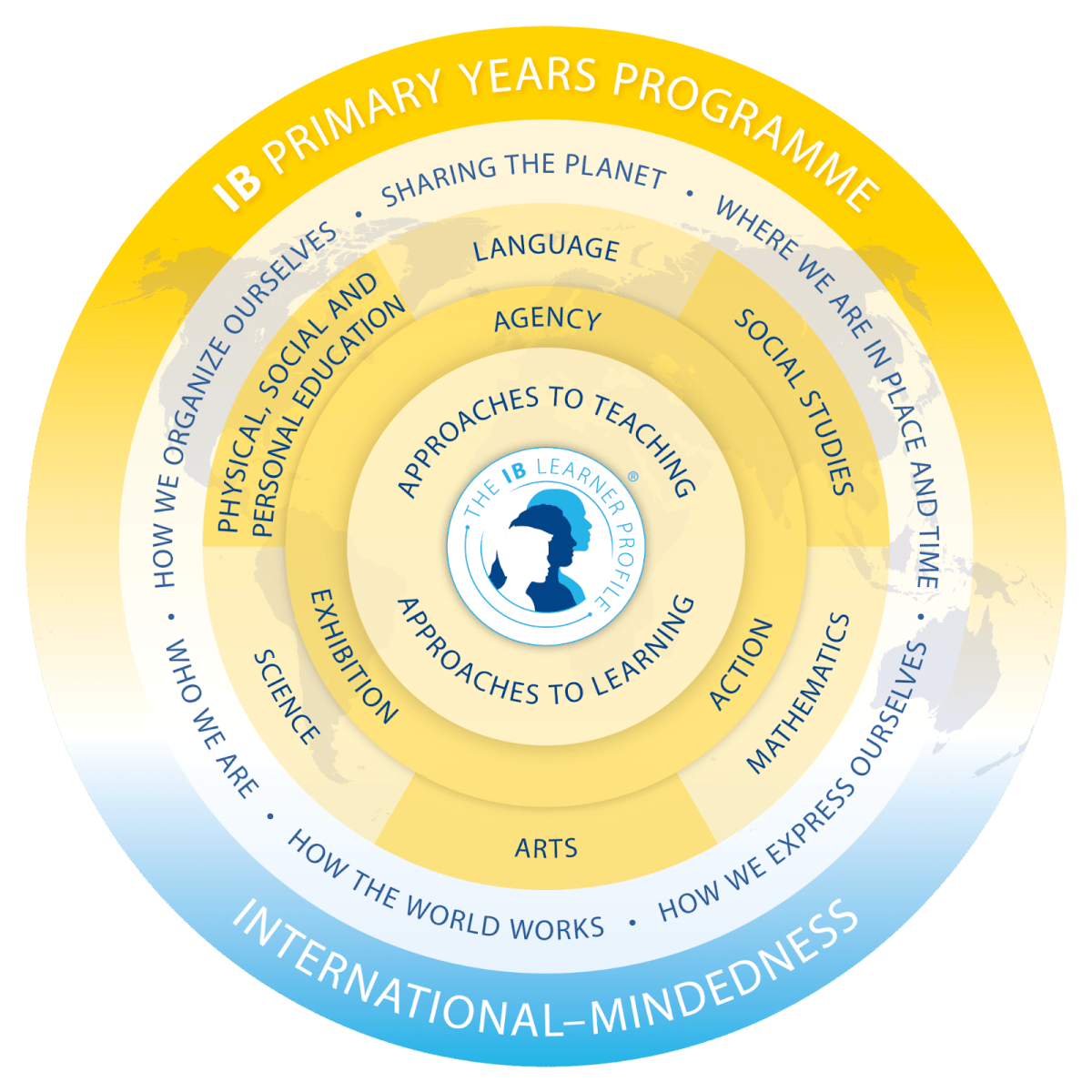
PYP curriculum framework - International Baccalaureate®
About IB: History and Mission
The International Baccalaureate (IB) was established in 1968 in Geneva, Switzerland, as an independent, non-profit educational foundation. Its original goal was to make it easier for students to study internationally by offering a secondary school diploma recognized by universities around the world. Since then, the IB's mission has grown, and it now provides a globally respected education for students of all ages.
IB Mission Statement:
The International Baccalaureate aims to develop inquiring, knowledgeable and caring young people who help to create a better and more peaceful world through intercultural understanding and respect. To this end the organization works with schools, governments and international organizations to develop challenging programmes of international education and rigorous assessment. These programmes encourage students across the world to become active, compassionate and lifelong learners who understand that other people, with their differences, can also be right.
Why IB?
The IB-PYP provides a globally recognized framework that nurtures the whole child- academically, socially and emotionally. Makowski believes the IB approach empowers students by:
Encouraging Inquiry - The PYP encourages curiosity and learning in a creative, supportive, and collaborative way.
Creating Real World Understanding - PYP students create meaning for themselves by exploring real world issues.
Building Confident Communicators - PYP students learn to communicate in a variety of ways and in more than one language.
Learning How to Learn - Students work together with teachers and classmates to set goals, reflect, and take charge of their own learning.
Instilling Global Thinkers - Students learn to appreciate and respect different cultures, ideas, and ways of life while keeping an open mind.
Looking Through Many Lenses - Students think critically and creatively to understand different points of view and solve problems across all subjects.
Taking Action - Students believe they can make a difference and take responsibility by making smart choices and helping others.
Tackling Real Issues - Students explore big ideas and are encouraged to think deeply, be creative, and respond to challenges in a thoughtful way.
Learning Together - Students, families, and teachers work as a team to build a strong, caring school community where learning is shared.
IB Learner Profile:
The IB learner profile places the student at the center of an IB education.
The 10 attributes reflect the holistic nature of an IB education. They highlight the importance of nurturing dispositions such as curiosity and compassion, as well as developing knowledge and skills. They also highlight that, along with cognitive development, IB programmes are concerned with students’ social, emotional and physical well-being, and with ensuring that students learn to respect themselves, others and the world around them.
IB Learners strive to be:
Inquirers - We nurture our curiosity, developing skills for inquiry and research. We know how to learn independently and with others. We learn with enthusiasm and sustain our love of learning throughout life
Knowledgeable - We develop and use conceptual understanding, exploring knowledge across a range of disciplines. We engage with issues and ideas that have local and global significance.
Thinkers - We use critical and creative thinking skills to analyze and take responsible action on complex problems. We exercise initiative in making reasoned, ethical decisions.
Communicators - We express ourselves confidently and creatively in more than one language and in many ways. We collaborate effectively, listening carefully to the perspectives of other individuals and groups.
Principled - We act with integrity and honesty, with a strong sense of fairness and justice, and with respect for the dignity and rights of people everywhere. We take responsibility for our actions and their consequences.
Open-minded - We critically appreciate our own cultures and personal histories, as well as the values and traditions of others. We seek and evaluate a range of points of view, and we are willing to grow from the experience.
Caring - We show empathy, compassion and respect. We have a commitment to service, and we act to make a positive difference in the lives of others and in the world around us.
Risk-takers - We approach uncertainty with forethought and determination; we work independently and cooperatively to explore new ideas and innovative strategies. We are resourceful and resilient in the face of challenges and change.
Balanced - We understand the importance of balancing different aspects of our lives—intellectual, physical, and emotional—to achieve well-being for ourselves and others. We recognize our interdependence with other people and with the world in which we live.
Reflective - We thoughtfully consider the world and our own ideas and experience. We work to understand our strengths and weaknesses in order to support our learning and personal development.
We believe these attributes, and others like them, can help individuals and groups become responsible members of local, national and global communities.
IB- Learner Profile Attributes at Stanley M. Makowski #99- IB World School
IB Policies
Admission Policy - Link Found Here
Stanley Makowski ECC #99's admissions policy aligns with the admissions procedures established by the Buffalo Public Schools for non-criterion-based schools. Our process follows the district guidelines while upholding the International Baccalaureate (IB) philosophy of equitable access and inclusion for all learners.
Academic Integrity Policy- Link Found Here
At Stanley Makowski ECC #99, we uphold the principles of the International Baccalaureate (IB) by ensuring our academic policies align with the IB Academic Integrity Policy. This alignment supports our mission to develop principled, reflective learners who act with integrity in all aspects of their education.
Language Policy- Link Found Here
Makowski's Language Policy outlines our shared beliefs and practices about how language is taught, learned and celebrated within our community. It reflects our commitment to supporting every student's language development by honoring home languages, fostering multilingualism, and ensuring that language learning is integral to all areas of the IB Primary Years Programme.
Access and Inclusion Education Policy- Link Found Here
Makowski's Access and Inclusion Policy demonstrates our commitment to creating an equitable learning environment where every student can reach their full potential. We believe that all learners bring unique strengths and perspectives, and we provide the necessary supports, strategies and resources to ensure that every child can fully participate in the IB- PYP.
Assessment Policy- Link Found Here
Our school's Assessment Policy explains how we use assessment to support and celebrate student learning. Through ongoing monitoring, documenting, measuring and reporting we are able to help students take ownership of their learning within the IB PYP.
IB PYP Complaints Procedure
Parent, Guardian, and Student Concern & Feedback Process (PYP)
At our IB Primary Years Programme (PYP) school, we believe that open, respectful communication builds trust and strengthens our community. We encourage parents, guardians, and students to share questions, concerns, or feedback so that we can work together to support every child’s well-being and learning journey.
While families are welcome to contact any member of our staff at any time, concerns may be referred to the team member best suited to address the matter. This ensures that communication remains effective, clear, and focused on finding positive solutions.
Strong partnerships between home and school are essential to nurturing internationally minded, caring, and reflective learners.
Steps for Addressing a Concern:
1. Start with the Classroom Teacher
If a concern arises about a class, assignment, or classroom situation, we encourage parents, guardians, or students to begin by communicating directly with the classroom teacher. Most issues can be resolved through a respectful conversation and mutual understanding.
2. Seek Support from the IB Coordinator or School Counselor
If the concern is IB-related, the next step is to contact the PYP Coordinator for clarification and/or guidance.
If the concern is non-IB related, families or students should reach out to the SST Team (Student Support Team), who can provide additional support and help identify next steps.
3. Contact the Administrative Team
If the concern remains unresolved after these conversations, families may contact the administrator responsible for the relevant area (this may be an assistant principal).
4. Final Step: Principal Review
If further review is necessary, or if the administrator involved is the Principal, the Principal will serve as the final point of contact in the process.
Our goal is to ensure every member of our learning community feels heard, valued, and respected. By following these steps, we can maintain a positive partnership that supports our shared mission as an IB World School.
Our IB- PYP Coordinator is Natasha Marciano.