Restorative Practices
Restorative Practices (RP) is a safe and supportive approach to taking responsibility for our actions. By repairing harm and promoting fairness, we help create a more respectful school and community.
Benefits of Restorative Practices
Establish a safe school community.
Reduce misbehavior, violence, bullying, short and long-term suspensions.
Supports relationships among students, staff and families.
Repair the harm caused by misbehavior.
Reintegrates students into a positive learning environment.
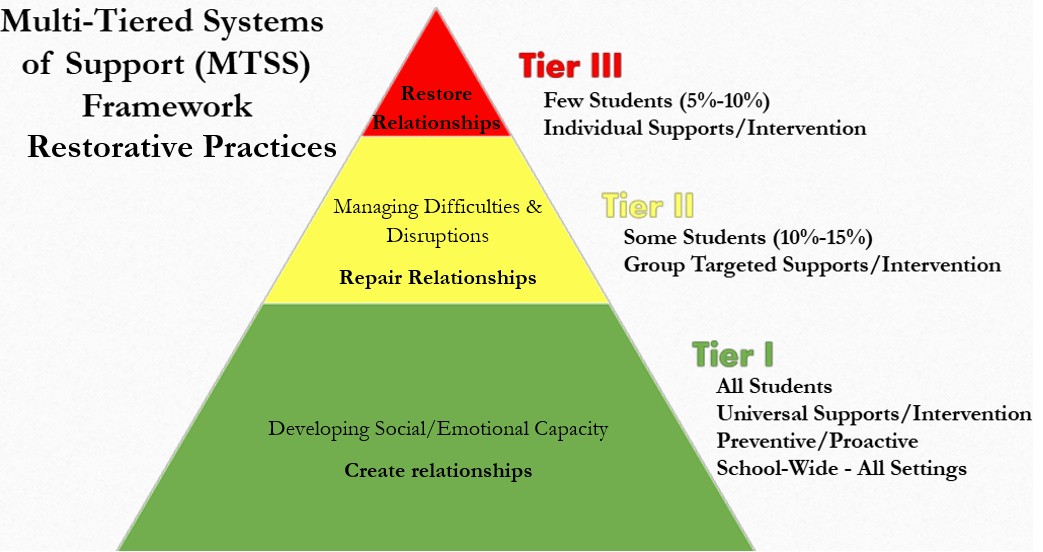
Tier 1
Create Relationships
Affective Statements is a powerful skill to model ways of expressing our feelings and needs.
Community Building/Academic Circles are facilitated group dialogues that builds community, strengthen relationships, and resolve conflicts by creating a safe space for everyone to speak and be heard, focusing on mutual understanding, shared responsibility, and repairing harm rather than blame or punishment, using a talking piece for equal participation
Social Emotional Learning (SEL) is the process through which all young people and adults acquire and apply the knowledge, skills, and attitudes to develop healthy identities, manage emotions and achieve personal and collective goals, feel and show empathy for others, establish and maintain supportive relationships, and make responsible and caring decisions.
Tier 2
Repair Relationships
Restorative Conversations are guided, empathetic conversations focused on repairing harm and rebuilding relationships after a conflict, using specific questions to help individuals take responsibility, understand impact, and collaboratively find solutions, rather than just punishing. It emphasizes accountability, empathy, and community building, moving beyond “right or wrong” to focus on how actions affect people and how to heal those connections.
Tier 3
Restore Relationships
Restorative Conferences are structured, voluntary meetings facilitated by a neutral third party that brings together people harmed by wrongdoing and those who caused the harm to discuss the incident, its impact, and agree on how to repair the harm and restore relationships, often resulting in an agreement that focuses on healing, accountability, and finding a positive way forward, including support people (family, community) for all parties, rather than just punishment.