NY Inspires: Redefine Credits & Learning Experiences
What does the Department mean by “redefining credits”?
Currently, most students earn credit through the successful completion of a unit of study. A unit of study is based on a requirement for schools to provide a minimum of 180 minutes of instruction per week, or the equivalent (i.e., 108 hours of instruction for one diploma credit). This time-based system stems from the Carnegie Unit. The Carnegie unit was developed in 1906 by the Carnegie Foundation to measure the amount of time a student studied a subject. Now, even the Carnegie Foundation supports a move away from time-based systems.
The Department proposes a redefining of credits to focus on student proficiency and to expand the ways students demonstrate their proficiency in the learning standards and the New York State Portrait of a Graduate. While specific details are forthcoming, the goal is to maintain all of the current options, many of which are not currently used by most schools and districts, while also adding new options to provide multiple means for students to demonstrate their proficiency in the desired learning outcomes prior to graduation.
When will credits be redefined?
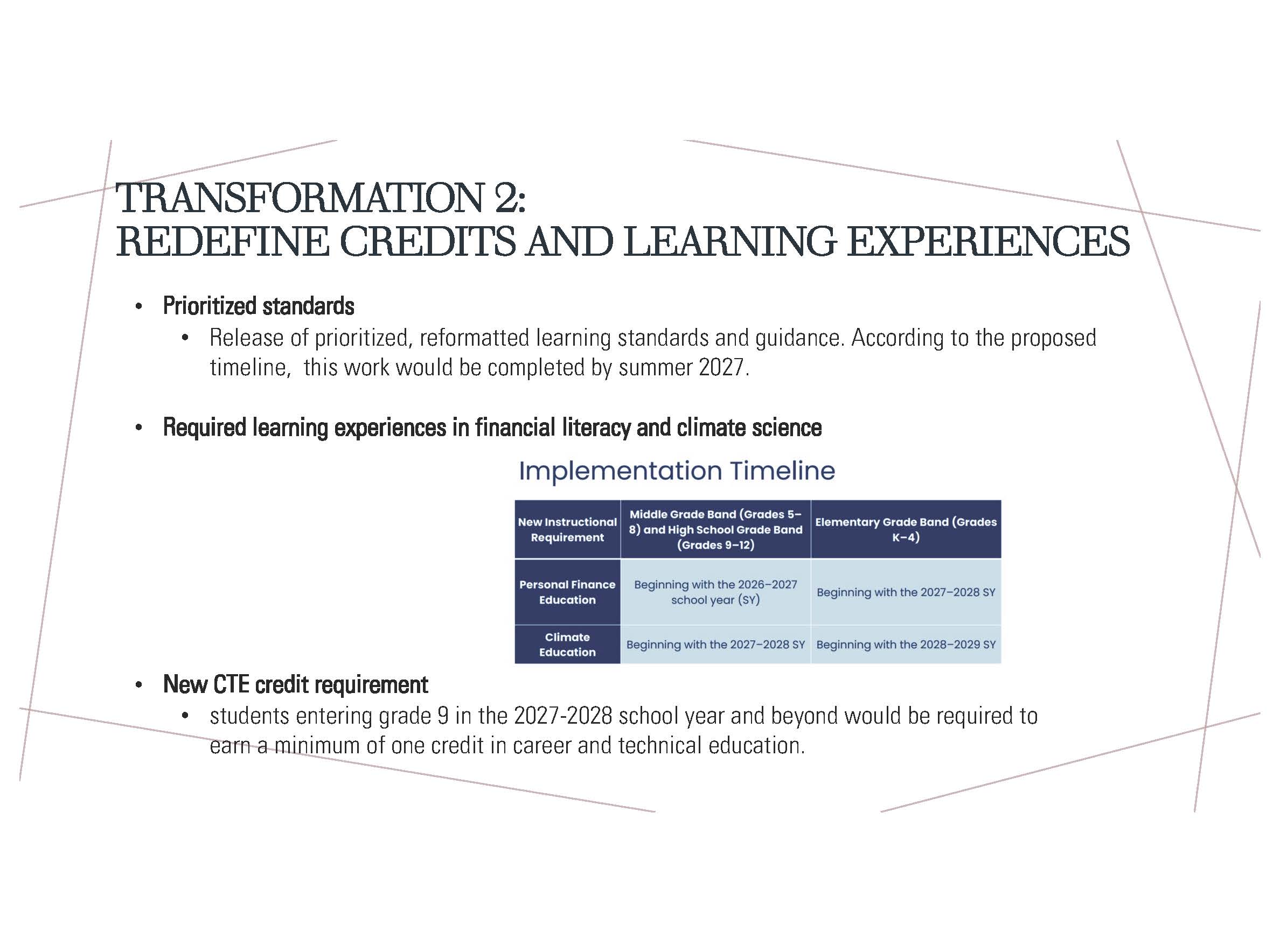
The Department plans to provide additional guidance on redefining credits and learning experiences following the release of prioritized, reformatted learning standards and guidance. According to the proposed timeline, this work would be completed by summer 2027.
Additionally, the proposed timeline includes a new credit requirement for students entering grade 9 in the 2027-2028 school year and beyond. If approved by the Board of Regents, all students entering high school during the 2027-2028 school year, and beyond, would be required to earn a minimum of one credit in career and technical education. While this may include credit in financial literacy, this requirement could be fulfilled through earning credit in any of the CTE disciplines which include agricultural education, business and marketing education, computer science education, family and consumer sciences education, health sciences education, technology education, and trade and technical education. Students may also earn credit in career and technical education through work-based learning experiences.
Also, as part of this transformation, new regulations regarding personal finance and climate science education have been passed.
Personal Finance:
Students entering grade 9 in 2027, and beyond, are required to earn one CTE credit, which could include financial literacy.
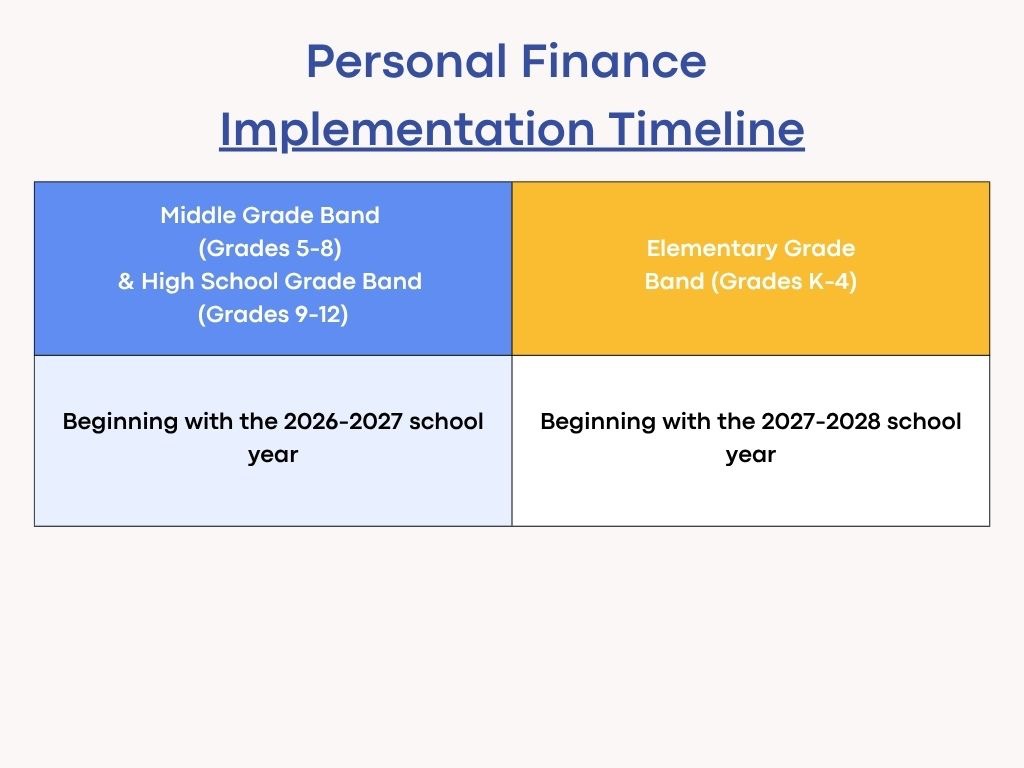
Revised regulations regarding personal finance have been adopted by the Board of Regents. Instruction in personal finance education must be provided by the end of the last year of each grade band – elementary (K-4), middle (5-8), and high school (9-12). Specifically:
Elementary school students must receive instruction by the end of grade 4.
Middle school students must receive instruction by the end of grade 8.
High school students must receive instruction by the end of grade 12.
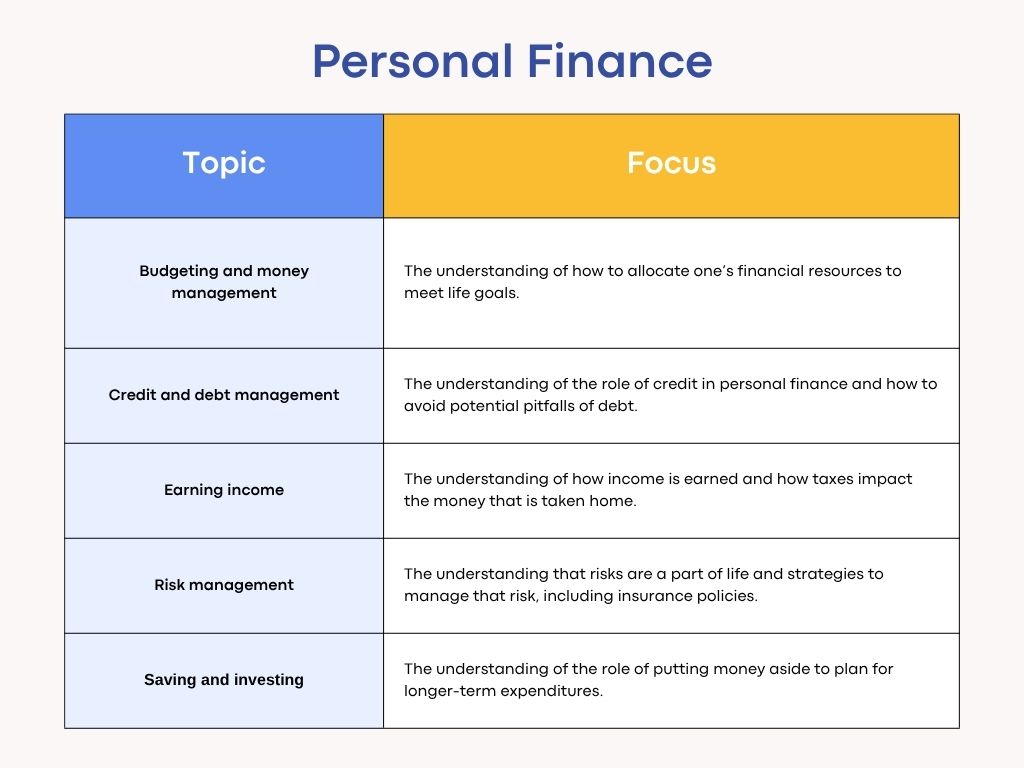
The following topics will be included:
Climate science:
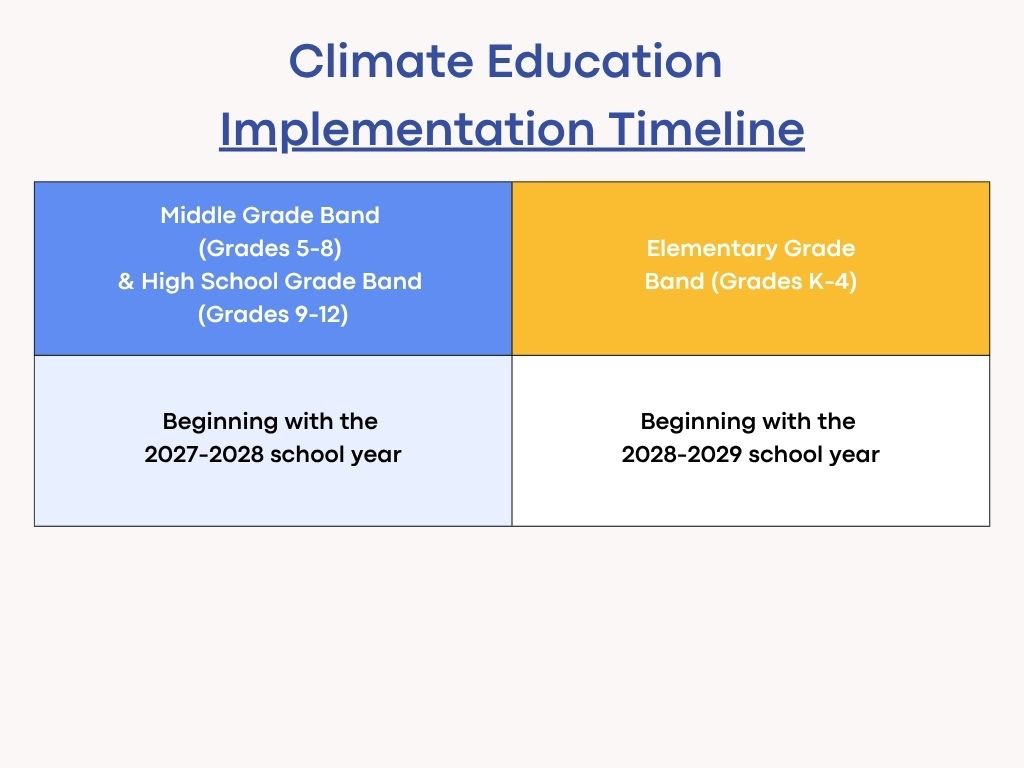
Revised regulations regarding personal finance have been adopted by the Board of Regents. The amendment provides that instruction in climate education must be provided by the end of the last year of each grade band – elementary (K-4), middle (5-8), and high school (9-12). Specifically:
Elementary school students must receive instruction by the end of grade 4.
Middle school students must receive instruction by the end of grade 8.
High school students must receive instruction by the end of grade 12.
the following topics will be included:
Causes of Climate Change
Impacts of Climate Change
Solutions for Climate Change